
How to Dose Fertiliser with a Tefen MixRite Pump? A Practical Guide to Effective Fertigation
How do you dose fertiliser using a Tefen MixRite pump and carry out effective fertigation in irrigation systems?
Correct fertiliser dosing is crucial for the effectiveness of fertigation, crop quality and the optimisation of production costs. An increasing number of farms, greenhouse growers and professional irrigation companies are choosing Tefen MixRite dosing pumps, which allow for precise fertiliser dosing in proportion to the water flow. This ensures that the nutrient solution reaches the plants at the correct concentration, making the entire process more predictable and cost-effective.
The Tefen MixRite pump is a hydraulic dosing unit designed for use in irrigation systems, which requires no electrical power. Using the energy of the flowing water, the device automatically draws the concentrate from the tank and mixes it with the main flow. This solution allows for effective crop fertilisation, maintains a stable pH and reduces fertiliser wastage.
What are Tefen MixRite dosing pumps and how do they work?
Tefen MixRite dosing pumps are professional devices designed for the proportional dosing of fertilisers and other preparations directly into the water stream. They operate on the basis of a hydraulic mechanism driven by water flow, meaning they do not require an electrical power supply. During operation, the pump draws concentrate from the tank and mixes it with water in a specific ratio, creating a homogeneous solution which is then directed to the irrigation system.
The most important advantage of MixRite technology is the maintenance of a constant dosing ratio regardless of changes in flow, which ensures a stable nutrient concentration and high process repeatability. This allows the user to precisely dose fertiliser, pH adjustment agents or water treatment chemicals. Bosta offers various MixRite models that can be adapted to the size of the system, the required flow rate and the type of liquid being dosed. Suitable types of these pumps are also frequently used in livestock systems for animal watering, mainly as dispensers for medicines and nutrients.
Why is it worth dosing fertiliser using Tefen MixRite pumps?
For professional farms, greenhouse growers and irrigation companies, it is not only the fertiliser dosing itself that is crucial, but also its repeatability and efficiency. Tefen MixRite pumps help to reduce fertiliser wastage and ensure a more even supply of nutrients to crops. As a result, plants receive a properly prepared nutrient solution, which supports their healthy growth and allows for better utilisation of the nutrients supplied.
In fertigation, maintaining a stable concentration of the fertiliser solution is particularly important, as even slight deviations can affect crop quality. The use of a dosing pump allows for greater control over the fertilisation process, streamlines operators’ work and improves the predictability of results in the day-to-day operation of the system.
Which Tefen MixRite pump is right for your system?
One of the greatest advantages of the MixRite series available from Bosta is the ability to match the pump to the size of the system, the required flow rate and the type of liquid being dosed.
Key features of Tefen MixRite pumps:
- stable dosing rate,
- adjustable mixing ratio,
- hydraulic drive without electricity,
- simple operation,
- wide range of applications in fertigation, animal watering systems, medicine dosing and water treatment.
MixRite Series
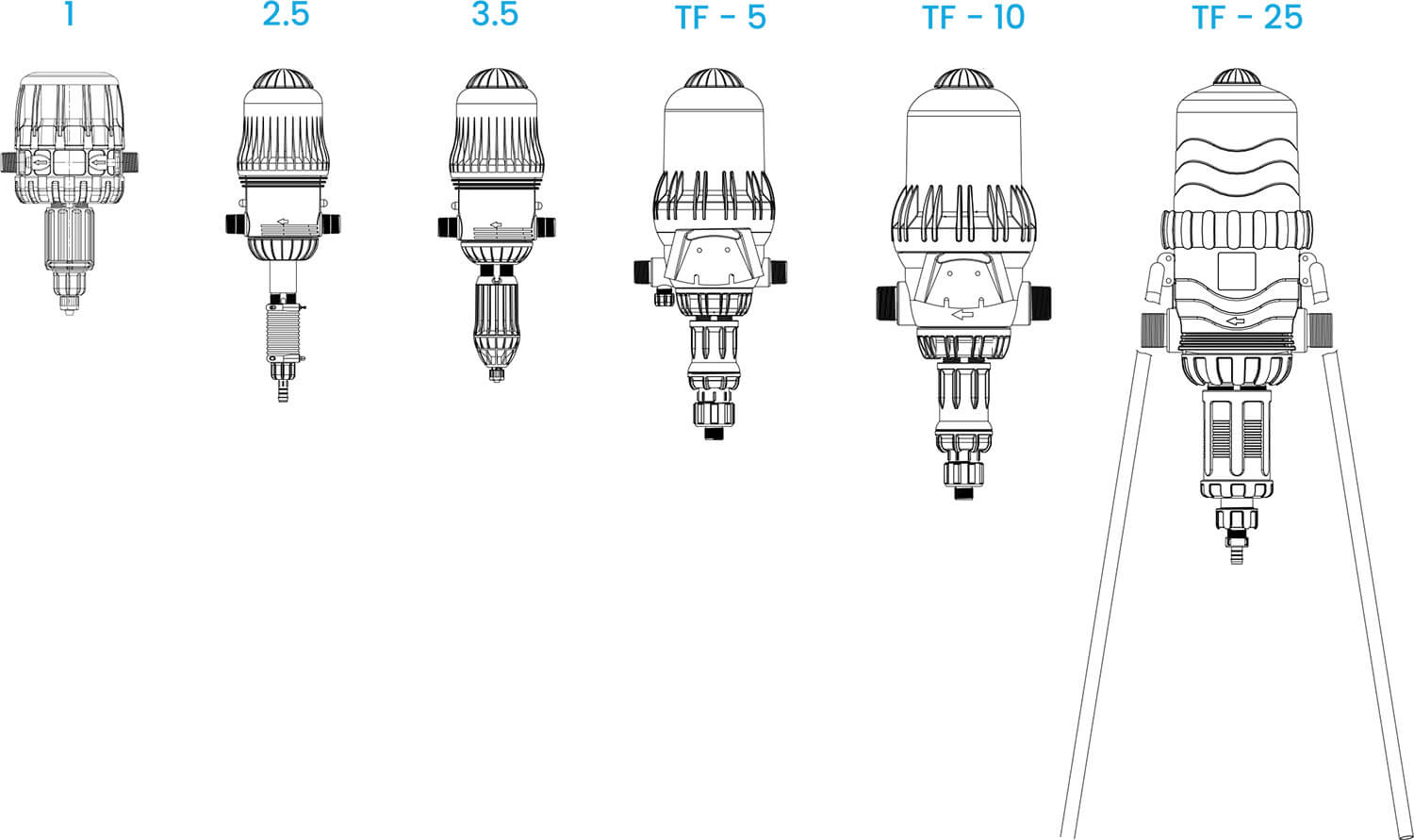
How to choose a fertiliser dosing pump?
When selecting a dosing pump, you must determine the system’s operating parameters. The most important factors are flow rate, required pressure and the expected dosing rate.
The type of medium is also important. In some systems, the pump is used exclusively for fertiliser dosing, whilst in others it is responsible for dispensing pH-regulating additives or preparations used in water treatment.
Before purchasing, it is worth analysing the required quantity of the dosed preparation, the expected concentration and the system parameters. This allows you to select a device that meets your specific needs.
How do Tefen pumps help control pH and dose corrective preparations?
MixRite pumps can be used for more than just fertiliser dosing. One of their applications is also the dosing of pH-regulating preparations.
Many farms use acid to maintain the correct water parameters. The correct pH has a direct impact on the availability of nutrients and the effectiveness of fertilisation.
When working with more demanding media, the pump model and the materials in contact with the dispensed liquid must be selected appropriately. This applies particularly when concentrated acids or preparations classified as aggressive chemicals are used.
What are the benefits of proportional dosing technology?
MixRite technology has been developed with precision dosing in mind. Its key advantage is its proportional operation, which automatically adjusts the amount of concentrate dosed to the water flow.
This solution allows a constant nutrient concentration to be maintained regardless of the system’s operating conditions. At the same time, it reduces the risk of errors resulting from manual adjustment of dosing parameters.
An additional advantage is the ability to operate without electricity. The pump uses a hydraulic drive, which translates into simpler operation and fewer mechanical components subject to wear.
Tefen MixRite pumps in water treatment
Although MixRite pumps are most commonly associated with fertigation, their applications are much broader. The manufacturer also envisages the use of these devices in water treatment processes.
The pumps can dose preparations used for disinfection, chlorination or improving the quality parameters of the medium. Maintaining a constant ratio increases the efficiency of the process and helps to reduce chemical consumption.
In many systems, dosing the appropriate chemicals helps to reduce deposits and minimise the risk of sediment forming in pipes and system components.
Why are Tefen pumps popular in professional agriculture?
The popularity of Tefen pumps stems primarily from their reliability and simplicity of operation. By utilising the energy of the flowing water, the devices can operate without an external power supply, which reduces operating costs.
For users in the B2B sector, the wide range of models and the ability to tailor the solution to the requirements of a specific installation are also of significant importance. Whether the aim is fertiliser dosing, fertigation or water treatment, the MixRite pump ensures a high degree of process repeatability.
The benefits of using Tefen dosing pumps also include easy installation, an automatic dosing process and the ability to integrate them with existing irrigation systems.
FAQ – frequently asked questions about Tefen MixRite pumps
Do Tefen MixRite pumps require an electrical supply?
No. Each pump uses a hydraulic drive based on water flow, so it does not require electricity to operate.
Can a Tefen pump dose both fertiliser and acid?
Yes. Depending on the pump model, they can dose both fertiliser and pH-adjusting agents. For pumps operating with more demanding media, the appropriate material version must be selected.
Are MixRite pumps suitable for fertigation?
Yes. Fertigation can be considered one of the main applications of the MixRite series. The units allow crops to be irrigated whilst simultaneously delivering nutrients along with the water.
How do I choose the right fertiliser dosing unit?
You should take into account the flow rate, pressure, type of medium and the expected dosing rate. The range includes models designed for both smaller installations and large industrial systems.
Is it possible to use two pumps in a single system?
Yes. The use of two pumps is common in more complex systems where it is necessary to dispense different formulations separately or maintain different ratios for individual components.
Key information about Tefen MixRite pumps
- The Tefen MixRite pump allows for precise dosing of fertiliser in proportion to the water flow.
- The dosing unit operates without electricity and uses a hydraulic drive.
- The pumps are used in fertigation, water treatment and professional agriculture.
- It is possible to dose fertilisers, pH adjustment preparations and disinfectants.
- A constant nutrient concentration increases fertilisation efficiency and improves nutrient utilisation.
- A suitably selected pump helps to reduce the risk of dosing errors and improves the system’s operational efficiency.
- Proportional dosing technology ensures high process quality regardless of changes in water flow.
